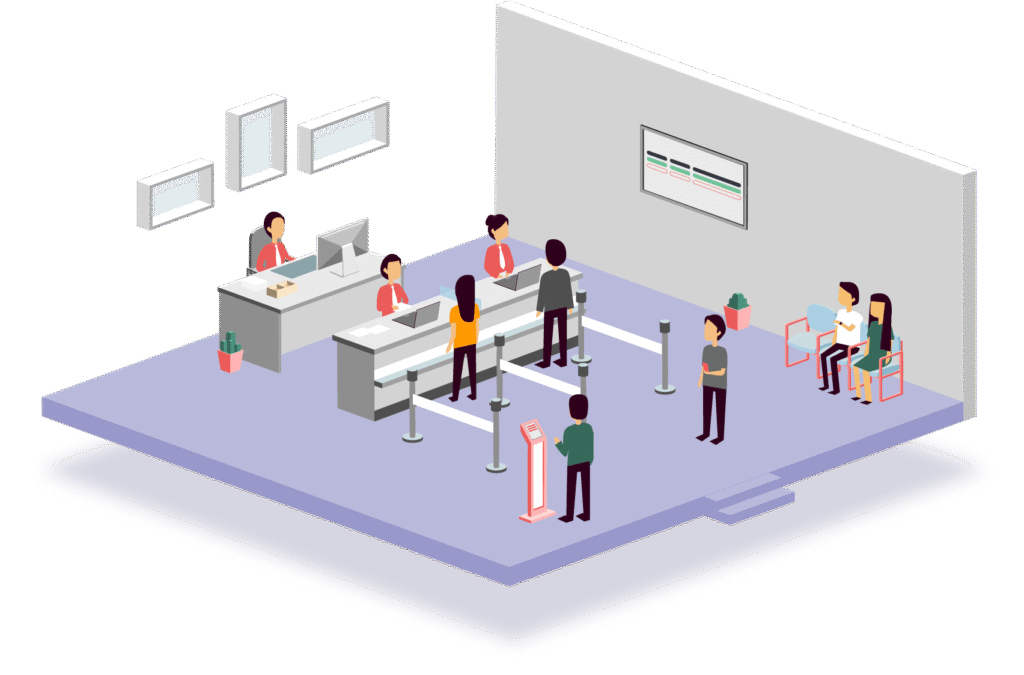
Long waiting lines are the number one cause of customer frustration. Whether in a bank, hospital, government office, or retail store, nobody enjoys standing in unstructured queues. A professional Queue Management System transforms chaotic waiting into an organized, efficient, and even pleasant experience by using digital ticketing, display screens, audio announcements, and mobile notifications to guide customers seamlessly from arrival to service.
In Saudi Arabia’s Eastern Province, particularly in the bustling commercial hubs of Dammam and Khobar, the demand for professional queue management solutions is growing rapidly. With major branches of banks, insurance companies, and government offices serving hundreds of customers daily, efficient queue management has become essential for maintaining customer satisfaction and operational efficiency.
Queue Management System in Dammam: The Industrial Capital’s Efficiency Drive
Dammam, the capital of Saudi Arabia’s Eastern Province and a major Gulf port city, is home to a growing number of businesses, government institutions, and healthcare facilities serving thousands of customers daily. A Queue Management System in Dammam must address the unique characteristics of this industrial hub: high customer volumes, diverse demographics, and the need for efficient service delivery in a fast-paced environment.
The Dammam Market Imperative
Dammam’s strategic importance as the gateway to the Eastern Province makes it a critical market for queue management solutions. The city is home to King Abdulaziz Port, one of the Kingdom’s largest ports, and serves as a commercial hub for the surrounding industrial zones. Banking, insurance, government service centers, and healthcare facilities in Dammam handle significant daily foot traffic and are under increasing pressure to digitize and improve service delivery.
Success in the Insurance Sector
A landmark queue management implementation serving the Dammam region occurred at Al Rajhi Takaful, one of the leading insurance companies in Saudi Arabia. The company faced significant challenges at its major branches across the Kingdom, including a branch in Khobar serving the Dammam metropolitan area. The results were transformative:
Before Implementation:
- Customer Footfall: 250 to 300 customers per day
- Average Wait Time: 1.5 to 2 hours
- Customer Satisfaction: Low, with high abandonment rates
After Implementation:
- Average Wait Time: Just 30 minutes
- Improvement: 70% decline in customer waiting times
- Customer Satisfaction: High, with improved retention
Key Components of the Dammam Solution
The solution implemented by Wavetec transformed the customer journey across five major branches, including Riyadh, Khobar, Jeddah, Jezan, and Khamis Meshist. Key components of the system included:
Touchscreen Ticketing Kiosks: Allowing customers to take service tickets for different categories including Own Damage, Third Party, and Cheque services.
Mobile App Integration: A customized mobile app enabling customers to take a service ticket for a specific time slot using the mobile app and arrive at the branch accordingly.
Digital Displays: Counter Displays and large LCD screens showing real-time queue status, helping customers track their position.
Customer Feedback System: Post-service satisfaction measurement tablets, allowing management to gather valuable opinions, analyze feedback, and generate reports to enhance service delivery.
| Metric | Before | After | Improvement |
|---|---|---|---|
| Average Wait Time | 1.5–2 hours | 30 minutes | 70% reduction |
| Queue Congestion | High | Short and manageable | Significant reduction |
| Staff Productivity | Constrained by crowd management | Focused on service delivery | Improved |
| Customer Satisfaction | Low | High | Substantial increase |
Dammam-Specific Requirements
For businesses in Dammam, queue management systems must offer:
Bilingual Support: Arabic and English interfaces to serve the diverse population, including the large expatriate workforce.
Mobile Integration: With high smartphone penetration, systems that send SMS or app notifications are particularly effective.
Footfall Analytics: Data on peak hours and wait times to optimize staffing for Dammam’s unique traffic patterns. A Footfall counter in Saudi Arabia helps businesses see how many people enter, when they come, and how long they wait.
Integration with Existing Systems: Compatibility with existing CRM and appointment systems to create seamless operations.
Cloud-Based Solutions: The adoption of cloud-based queue management systems is growing in the GCC region, offering advantages such as scalability, reduced upfront costs, and real-time data analysis.
Queue Management System in Khobar: The Commercial Hub’s Customer-Centric Approach
Khobar, the vibrant commercial center of the Eastern Province, is known for its modern infrastructure, corporate headquarters, and premium retail destinations. A Queue Management System in Khobar must cater to a discerning customer base that expects efficiency, professionalism, and seamless service delivery.
The Khobar Market Imperative
Khobar’s position as a preferred residential and commercial destination for expatriates and Saudi professionals creates unique demands for queue management. The city is home to numerous corporate offices, banks, healthcare facilities, and upscale retail centers. Customers in Khobar have high expectations for service quality and efficiency, making queue management systems an essential tool for businesses seeking to maintain a competitive edge.
Government Sector Transformation
The transformation of Saudi Post (SPL) across multiple locations demonstrates how queue management systems enhance citizen experience. SPL selected SEDCO’s Queue Management solution to transform offices into smart branches, enhancing citizen experience through:
- Queuing Management: Citizens can directly join the queue by printing tickets from queuing kiosks, eliminating unorganized lines.
- Customer Identification: Matching up the right staff member with the service requested.
- Digital Signage: Citizens can be called forward through audio announcement or by checking queue status on digital screens.
- Business Intelligence Integration: Enables SPL management to better control branches and plan resources.
- Real-time Monitoring: Branch managers receive SMS or email alerts whenever an issue arises for immediate action.
Virtual Queuing for Premium Service
In Khobar’s premium commercial environment, virtual queue management is rapidly gaining adoption. Virtual queuing allows customers to join a digital queue remotely via their smartphones or kiosks and receive real-time updates, freeing them from physically waiting in line. Key features include:
- Real-time updates on queue position and wait time
- QR Code check-in – customers can join virtual queues in seconds
- Mobile notifications when their turn is approaching
- Appointment booking to join a virtual queue from home
- No costly hardware – web-based systems only require a browser to operate
This approach is particularly valuable for Khobar’s busy professionals who value their time and expect seamless, technology-driven service experiences.
Industry Trends in the Eastern Province
Healthcare Sector Growth
The healthcare sector in Saudi Arabia is seeing significant investment. Saudi Arabia accounts for approximately 60% of total healthcare expenditure among Gulf Cooperation Council (GCC) countries. The Saudi government has announced substantial investment of US$ 36.8 billion in healthcare and social development, representing 14.4% of its total budget, with plans to invest around US$ 65 billion to develop robust healthcare infrastructure by 2030.
AI and Analytics Integration
The integration of artificial intelligence and analytics into queue management systems is becoming more common. AI-powered queue management systems are revolutionizing how businesses handle customer flow by:
- Predicting peak times using historical and real-time data
- Optimizing staffing levels based on predicted demand
- Providing real-time alerts and notifications for enhanced operational efficiency
- Using computer vision to monitor waiting areas and adjust staffing proactively
Market Growth Projections
The Middle East and Africa queue management system market was valued at approximately US$ 47.66 million in 2023 and is projected to reach US$ 73.94 million by 2031, reflecting a CAGR of 5.6%. The virtual queuing segment held the largest share of the market, while the solutions segment dominated the component category.
Key Features to Look for in a Queue Management System
Based on successful implementations in Dammam, Khobar, and across the Kingdom, organizations should look for the following features when selecting a queue management system:
| Feature Category | Key Capabilities |
|---|---|
| Self-Service Options | Ticketing kiosks, QR code check-in, mobile app integration |
| Digital Signage | Real-time queue status, estimated wait times, promotional content |
| Mobile Engagement | SMS notifications, app alerts, WhatsApp queuing |
| Appointment Management | Online booking, calendar integration, scheduled visits |
| Virtual Queuing | Remote joining, real-time position tracking, arrive when called |
| Analytics & Reporting | Footfall tracking, peak hour analysis, service time measurement |
| Customer Feedback | Post-service satisfaction surveys, real-time feedback collection |
| Integration | CRM connectivity, ERP integration, existing system compatibility |
| Bilingual Support | Full Arabic-English interfaces for universal accessibility |
Benefits of Implementation
Implementing a queue management system in Dammam or Khobar offers multiple advantages:
- Reduced Wait Times: Virtual queuing improves both perceived and actual wait times, enhancing customer satisfaction.
- Improved Service Efficiency: Staff can focus on service delivery instead of manually managing crowds or directing customers.
- Enhanced Customer Experience: Clear guidance, real-time updates, and comfortable waiting areas reduce customer stress.
- Data-Driven Decisions: Gain insights into peak hours, service times, and customer flow to optimize staffing and operations.
- Fair and Transparent Service: Ensures first-come, first-served policy with minimal conflict or confusion.
The NextGen Technologies: Your Queue Management Partner in the Eastern Province
When it comes to designing, installing, and supporting professional queue management systems in Dammam, Khobar, and across the Eastern Province, The NextGen Technologies leads the market. As a premier provider of queue management solutions in Saudi Arabia, The NextGen Technologies combines deep local expertise with global technology standards.
Why Choose The NextGen Technologies
Local Market Understanding: The NextGen Technologies has extensive knowledge of customer behaviors, regulatory requirements, and operational challenges specific to Dammam and Khobar. They understand the unique demands of the Eastern Province’s diverse population and business environment.
Bilingual Arabic-English Systems: All queue management systems support full bilingual operation, including ticket text, display screens, audio announcements, and staff interfaces—ensuring accessibility for all customers.
Mobile App and WhatsApp Integration: The NextGen Technologies specializes in integrating queue management systems with mobile apps and WhatsApp—a critical feature for the Saudi market where WhatsApp is widely used for daily communication. This enables customers to join queues remotely, receive real-time position updates, and get notified when their turn approaches.
Comprehensive Analytics: Their systems include footfall counters and analytics that track how many people enter, peak hours, and wait times. This data allows businesses to plan staffing more effectively during busy hours.
Seamless Integration: Their queue management solutions connect flawlessly with existing CRM systems, appointment systems, and other business tools.
24/7 Technical Support: The NextGen Technologies provides 24/7 technical assistance, regular system health checks, and ongoing maintenance, ensuring minimal downtime.
Comprehensive Solutions Offered
The queue management solutions offered by The NextGen Technologies include:
- Self-Service Ticketing Kiosks: Intuitive touch-screen or button-based kiosks with bilingual interfaces
- Digital Customer Displays: High-visibility LED and LCD screens showing real-time queue status and estimated wait times
- Audio Announcement Systems: Clear voice announcements in Arabic and English
- Staff Counter Units: Performance tracking and customer calling functionality
- Central Management Dashboard: Accessible from anywhere, providing real-time and historical data
- Mobile and WhatsApp Notification Integration: For remote queuing and customer updates
- Footfall Counter and Real-Time Analytics: Data-driven insights for continuous operational improvement
- Customer Feedback Integration: Post-service satisfaction measurement
Don’t let disorganized queues damage your reputation and drive customers away. Partner with The NextGen Technologies to transform your customer waiting experience. Visit their website at thenextgentechnologies.com to schedule a consultation, request a quote, or speak with a queue management specialist.
Conclusion
Long waits drive customers away and put pressure on staff. A professional Queue Management System organizes customer flow, reduces frustration, and provides valuable operational data.
In Dammam, where industrial activity and population density create high customer volumes, queue management systems have demonstrated remarkable results. Al Rajhi Takaful’s implementation achieved a 70% decline in waiting times, reducing wait times from 1.5–2 hours to just 30 minutes.
In Khobar, the premium commercial environment demands seamless, professional service delivery. Virtual queuing, mobile notifications, and bilingual systems are transforming the customer experience, with innovations like QR code check-in, appointment booking, and real-time position tracking becoming standard expectations.
The healthcare sector in the Eastern Province is also embracing queue management, backed by substantial government investment of US$ 65 billion in healthcare infrastructure by 2030. The market is projected to grow at a 5.6% CAGR, driven by the need for improved customer satisfaction across banking, healthcare, government, and retail sectors.
The NextGen Technologies stands as a premier provider in the Eastern Province, delivering end-to-end queue management solutions that are robust, intelligent, and tailored to the unique needs of Dammam and Khobar businesses. Do not let disorganized queues damage your reputation. Visit thenextgentechnologies.com today and transform your customer waiting experience.
Frequently Asked Questions (FAQs)
1. What is a queue management system and how does it work?
A queue management system is a digital solution that organizes customer flow using ticketing kiosks, display screens, audio announcements, and staff counter units. Customers take a ticket (or join via mobile app/WhatsApp), see their position on displays, and are called to a specific counter when their turn arrives. The system can also send notifications to alert customers when their turn is approaching, allowing them to wait remotely.
2. What results have businesses achieved with queue management in Dammam and Khobar?
At Al Rajhi Takaful’s branches (including Khobar), the implementation of an advanced queue management system resulted in a 70% decline in waiting times—reducing average wait times from 1.5–2 hours down to just 30 minutes. Organizations implementing such systems typically see reduced wait times, higher customer satisfaction rates, more customers served daily, and improved staff efficiency.
3. Can a queue management system integrate with WhatsApp for remote queuing?
Absolutely. Modern queue management systems offer WhatsApp and SMS integration, allowing customers to join queues remotely, receive real-time position updates, and get notified when their turn approaches—without needing to download a separate app. This is particularly valuable in Saudi Arabia where WhatsApp is widely used. Features include QR code check-in, appointment booking from home, and real-time updates on queue position.
4. Can businesses track and monitor queue performance in real-time?
Yes. Advanced queue management systems provide central management dashboards with real-time monitoring across single or multiple branches. Managers can track wait times, customer flow at peak hours, serving times, staff performance, and customer satisfaction. Some systems also offer SMS/email alerts when issues arise for immediate action.
5. Does The NextGen Technologies offer ongoing maintenance and support for queue management systems?
Yes. The NextGen Technologies provides comprehensive maintenance packages including regular system health checks, software updates, hardware repairs, and 24/7 technical support. Their fast response times and local presence in Saudi Arabia ensure any issues are resolved quickly, minimizing downtime for your operations. With the increasing adoption of cloud-based solutions, remote support and automatic updates are also available.