When most people picture a construction or excavation project, they think about what’s being built, not about what gets moved out of the way to make room. But here’s the truth: dirt, lots of it, is a constant byproduct of construction work. Before foundations, pools, basements, utility lines, or driveways can take shape, soil has to be excavated, hauled, and managed. That’s where dirt removal becomes one of the most important behind-the-scenes services in any project.
This article breaks down what Dirt Removal Detroit really involves, why it’s necessary, the different types of soil involved, and how the process supports everything from small residential builds to large-scale developments.
What Is Dirt Removal?
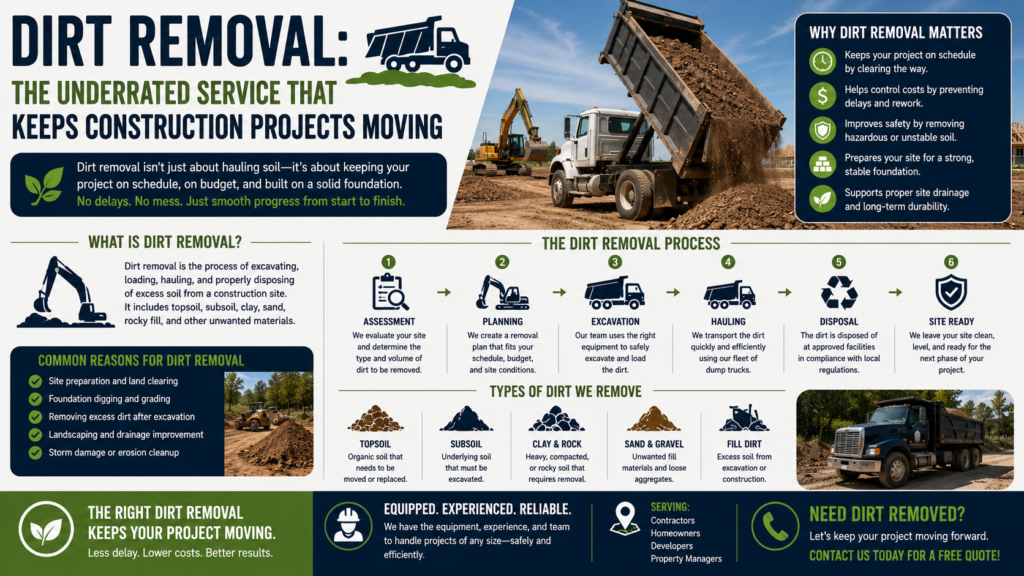
Dirt removal is the process of excavating and hauling away soil from a job site. It’s closely related to excavation but specifically focuses on the soil that’s been displaced. Once dirt is dug up, it has to go somewhere, whether that’s to another part of the property, a fill site, a recycling facility, or a disposal location. Dirt removal services handle that entire journey.
In some cases, dirt removal is paired with the delivery of new fill material to bring in cleaner or more stable soil to replace what was hauled out. In other cases, the focus is entirely on getting unwanted soil off the property.
Why Dirt Removal Is Necessary
Most construction projects can’t move forward without first dealing with the soil at the site. There are several reasons dirt removal becomes essential.
Foundation preparation. Buildings need stable, properly graded ground to sit on. Removing topsoil and unsuitable subsoil creates the conditions for a strong foundation.
Pool and basement excavation. Any time a large hole is dug, the displaced soil has to be transported off the property. A residential pool alone can produce dozens of cubic yards of dirt.
Utility installation. Water lines, sewer lines, gas lines, and underground electrical or telecommunications conduits all require trenches. Once the line is installed, leftover dirt often needs to be hauled away.
Grading and leveling. Achieving proper drainage and slope frequently means moving large volumes of soil. Some of it may stay on site, but much of it typically leaves.
Landscaping projects. Major landscape redesigns, retaining walls, drainage solutions, and garden installations often produce significant dirt that needs to be cleared.
Contaminated soil. In some cases, soil is removed because it contains contaminants and must be replaced with clean fill. Specialized handling and disposal procedures apply here.
Storm and erosion cleanup. Heavy rains, floods, and storms can move soil into places it shouldn’t be. Restoring the property usually involves both removing the displaced dirt and bringing in clean fill.
Different Types of Soil and Why It Matters
Not all dirt is the same, and understanding the differences helps explain why removal isn’t a one-size-fits-all process.
Topsoil. The nutrient-rich upper layer of soil that supports plant life. It’s often stripped and stockpiled at the start of a project so it can be reused for restoration.
Clay and silt. Common subsurface soils that may be too unstable or too dense for construction purposes.
Sandy soil. Loose and easy to dig but often unsuitable for direct construction without amendments.
Rocky soil. Contains varying amounts of stones and rock that require heavier equipment to excavate.
Contaminated soil. Soil with hazardous substances that needs testing, special transport, and disposal at certified facilities.
Clean fill. Soil that can be reused on site or transported to fill projects elsewhere. Reusing clean fill is far more sustainable than sending everything to a landfill.
Common Projects That Require Dirt Removal
Residential construction. New homes, additions, and renovations almost always involve dirt removal for foundations, basements, drainage, and landscaping.
Commercial construction. Office buildings, retail spaces, and industrial facilities require extensive excavation and dirt management.
Pool installations. One of the most common residential reasons for dirt removal. The volume of soil produced is significant.
Foundation repair. When repairs require excavating around a foundation, the soil that comes out usually needs to be removed.
Underground utility work. New water, sewer, electric, or gas line installations all generate dirt.
Site preparation. Clearing and grading a property for future development.
Drainage improvements. Solving drainage issues often involves digging trenches, swales, or dry wells, and removing the displaced dirt.
How the Dirt Removal Process Works
A typical dirt removal project starts with an assessment of the site, the type of soil, the volume to be removed, and any logistical considerations such as access points or environmental concerns. Once a plan is in place, the actual work proceeds in clear stages.
Excavation comes first, using equipment such as excavators, skid steers, and bulldozers. The soil is loaded into dump trucks for transport. Depending on the type and condition of the soil, it’s taken to appropriate destinations. Clean fill might go to another job site. Contaminated soil goes to certified facilities. General excavation soil is sometimes used for fill projects.
Throughout the process, attention is paid to factors like erosion control, dust management, traffic patterns, and minimizing disruption to the surrounding area. Once removal is complete, the site is typically prepared for the next stage of the project.
What Happens to Removed Dirt
Many people assume that removed dirt just gets thrown away. In reality, the destination depends on the type and quality of the soil. Clean fill is highly valuable and often reused for other construction projects, road bases, or landscaping needs. Contaminated soil follows strict regulations for testing, transport, and disposal.
This reuse-first approach reduces landfill use, lowers project costs in many cases, and supports more sustainable construction practices. Some projects even balance removal and fill so that very little soil leaves the site at all.
Common Questions About Dirt Removal
Can I keep removed dirt on my property? Sometimes, depending on the volume and your plans. Excess dirt is often used to fill low spots, level uneven areas, or create landscape features. But large quantities almost always need to be hauled away.
Is removed dirt always taken to a landfill? Not at all. Clean fill is frequently reused on other projects.
How much dirt does a typical project produce? It varies widely. A small foundation may produce a few yards, while a pool excavation can produce more than a hundred cubic yards. Commercial projects can produce thousands.
Do I need permits for dirt removal? Possibly. Local regulations vary, especially for large-volume removal or projects near environmentally sensitive areas.
Can contaminated soil be cleaned? In some cases, yes. Soil remediation techniques can treat certain contaminants, allowing the soil to be reused.
Why Detroit Properties Often Need Dirt Removal
Detroit and the surrounding region see a steady mix of residential construction, commercial development, infrastructure projects, and property redevelopment. Each of these activities generates substantial volumes of soil that need to be managed properly. Professional Dirt Removal Detroit services keep projects on schedule by handling excavation, hauling, and proper disposal in a way that supports both project goals and environmental compliance.
Wrapping Up
Dirt removal rarely gets the attention it deserves, but it’s one of the most fundamental parts of any construction or excavation project. Without it, foundations can’t be poured, pools can’t be installed, utilities can’t be buried, and properties can’t be properly graded. It’s the kind of service that makes everything else possible.
Done right, dirt removal isn’t just about hauling soil away. It’s about understanding the type of soil involved, planning the logistics, choosing the right destinations for the material, and minimizing waste through reuse whenever possible. It’s a service that combines heavy equipment with careful planning and environmental responsibility.
For any property owner planning a project that involves digging, knowing the basics of dirt removal makes for smoother conversations with contractors, better planning, and more realistic expectations. Move the dirt the right way, and everything else about the project gets easier.