Restaurant Storage in 2026: The Complete Warehousing Guide
Smart restaurant storage protects your ingredients, your budget, and your reputation for food safety. Whether you run a single kitchen or a growing chain, the way you store dry goods, chilled produce, and frozen stock decides how much you waste and how confidently you pass every inspection. In 2026, with food costs still under pressure across the region, disciplined warehousing is one of the clearest routes to a healthier margin.
This guide covers the storage zones every food business needs, the temperatures that keep stock safe, and the habits that stop spoilage before it starts. It even looks at how the same warehousing logic protects the electronics your kitchen relies on.
Why Restaurant Storage Decides Your Margin
Food waste is money in the bin. Every spoiled crate of vegetables or thawed protein is profit you already paid for. Good storage slows spoilage, keeps portions consistent, and lets you buy in bulk without fear of loss.
It is also a legal duty. The principles behind the U.S. Food and Drug Administration Food Code echo the hygiene rules enforced across the Gulf: separate raw from ready-to-eat, hold safe temperatures, and label everything clearly. Fail an inspection and the cost dwarfs any storage upgrade.
Scaling Beyond the Kitchen
Busy kitchens quickly run out of back-of-house space. Dedicated Storage for Restaurants gives multi-site operators and caterers overflow capacity for dry goods, beverages, and packaging without cluttering the line. Off-site warehousing frees your kitchen for cooking, not stacking.
The Four Storage Zones Every Kitchen Needs
Professional food storage splits into four temperature zones. Mixing them invites cross-contamination and spoilage. Keep each zone distinct and clearly labelled.
| Zone | Temperature | Typical Stock | Watch For |
|---|---|---|---|
| Dry store | 10°C to 21°C | Rice, flour, cans, oil | Pests, humidity |
| Chilled | 0°C to 4°C | Dairy, produce, sauces | Door seals, overloading |
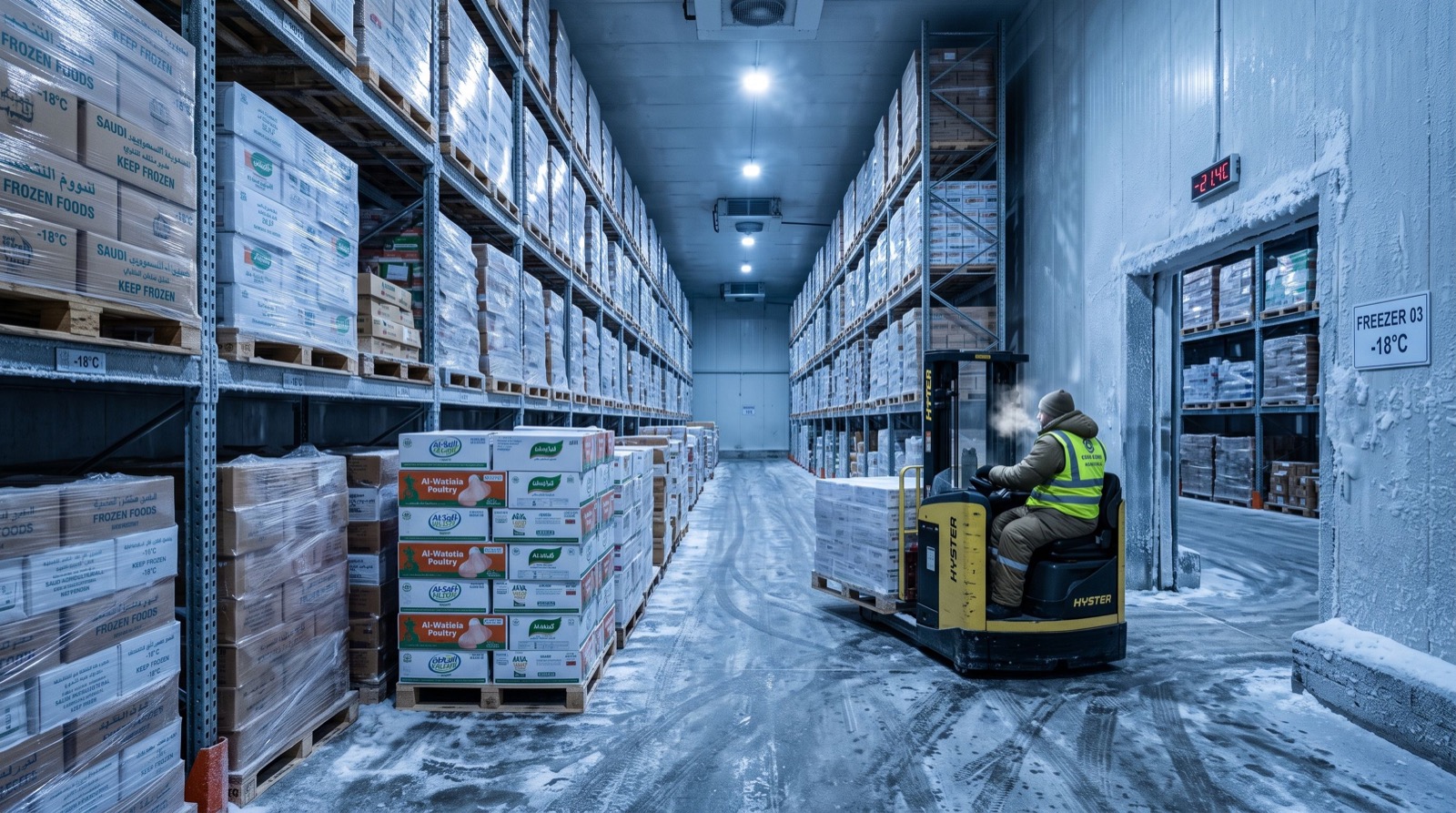
| Frozen | -18°C or below | Meat, seafood, fries | Freezer burn, thaw cycles |
| Beverage cool | 5°C to 12°C | Soft drinks, water | Direct sunlight |
Store raw meat on the lowest chilled shelves so drips never reach ready-to-eat food. This single rule prevents a large share of kitchen contamination cases.
How Should a Restaurant Organise Its Stockroom?
Organisation turns a chaotic store into a fast, safe workspace. A clear system cuts picking time and stops forgotten stock from rotting at the back. Follow this routine:
- Label every item with its delivery date and use-by date.
- Apply first-in, first-out so older stock always sells first.
- Keep frequently used items at eye level and heavy sacks low.
- Never store food directly on the floor; use racking with clearance.
- Run a weekly stock check to catch slow movers before they spoil.
Colour-coded labels for each day of the week make rotation almost automatic. Staff can spot an out-of-date item in seconds, which keeps both waste and risk low.
Habits That Cut Waste Fast
- Cool hot food quickly before it enters the chiller.
- Wrap and date all opened packages immediately.
- Keep chiller and freezer doors shut except during active loading.
- Audit deliveries at intake and reject anything above safe temperature.
Don’t Overlook Your Kitchen Electronics
A modern restaurant runs on devices: point-of-sale tablets, kitchen display screens, handheld order terminals, and backup routers. These sit in a hot, humid, greasy environment that quietly shortens their life. Spare units and seasonal equipment deserve proper storage too.
Using controlled Storage for Electronics & Smart Devices keeps backup tablets, chargers, and networking gear safe from heat and moisture until you need them. When a terminal fails mid-service, a properly stored replacement gets you back online in minutes rather than losing a whole shift of sales.
Humidity is the silent killer of electronics. Condensation corrodes circuit boards and battery contacts, and grease from a busy kitchen coats cooling vents until devices overheat. Storing spares in a clean, climate-controlled unit extends their working life far beyond what a back-office drawer ever could.
The same logic applies to seasonal gear. Outdoor heaters, festive lighting, and event equipment sit idle for months, and a controlled unit keeps them ready rather than rusting. Treat this hardware as the capital investment it is, and it will serve several seasons instead of one.
Choosing an Off-Site Storage Partner
As your restaurant grows, off-site warehousing becomes the smart way to buy in bulk and manage seasonal peaks. The right partner offers multiple temperature zones, food-safe certification, and quick access when service demands a top-up.
Look for reputable service experts who can show clean audit trails, reliable refrigeration, and flexible unit sizes. Ask about their temperature monitoring, their pest-control records, and how fast you can retrieve stock during a busy weekend rush.
Bulk buying only pays off when storage is dependable. If a discounted pallet of frozen protein thaws because a freezer failed, the saving evaporates instantly. Reliability, not just rental rate, is what turns bulk purchasing into a real cost advantage for a growing food business in 2026.
Questions to Ask a Provider
- Do they offer dry, chilled, and frozen zones under one roof?
- How do they monitor and log temperatures?
- What are their access hours during peak demand?
- Can they prove food-safety compliance on request?
Frequently Asked Questions
What are the main temperature zones for restaurant storage?
The core zones are dry storage at 10°C to 21°C, chilled at 0°C to 4°C, and frozen at minus eighteen or below. Beverages often sit in a cool zone around 5°C to 12°C. Keeping each zone distinct protects safety and quality.
How can restaurants reduce food waste through storage?
Label and date every item, rotate stock first-in-first-out, cool food quickly, and audit weekly. These habits stop stock expiring at the back of the shelf and keep more of your purchases on the plate rather than in the bin.
Why store raw meat on the lowest shelf?
Raw meat can drip juices that carry bacteria. Placing it on the lowest chilled shelf ensures any drips never fall onto ready-to-eat food below, which is a key rule for preventing cross-contamination.
Should a restaurant use off-site storage?
Yes, once demand outgrows back-of-house space. Off-site warehousing lets you buy in bulk, handle seasonal peaks, and keep the kitchen clear, as long as the facility offers proper temperature zones and quick access.
Final Thoughts
Effective restaurant storage protects your food, your compliance record, and your profit in equal measure. Separate your zones, hold safe temperatures, rotate with discipline, and store your kitchen electronics with the same care as your ingredients. Partner with a proven provider when you scale. Apply the steps in this 2026 guide, and your storeroom will quietly power a safer, more profitable kitchen all year round.